


Packing and Organizing a Storage Unit the Right Way
The real test of a storage unit is not how much you managed to fit into it. It is what happens six months later when you need one specific box and have to get to it without unpacking everything in front of it. Most packing advice focuses entirely on the first problem, cramming in as much as possible, and says almost nothing about the second, which is the one that actually determines whether renting the unit was worth it.
At a Glance
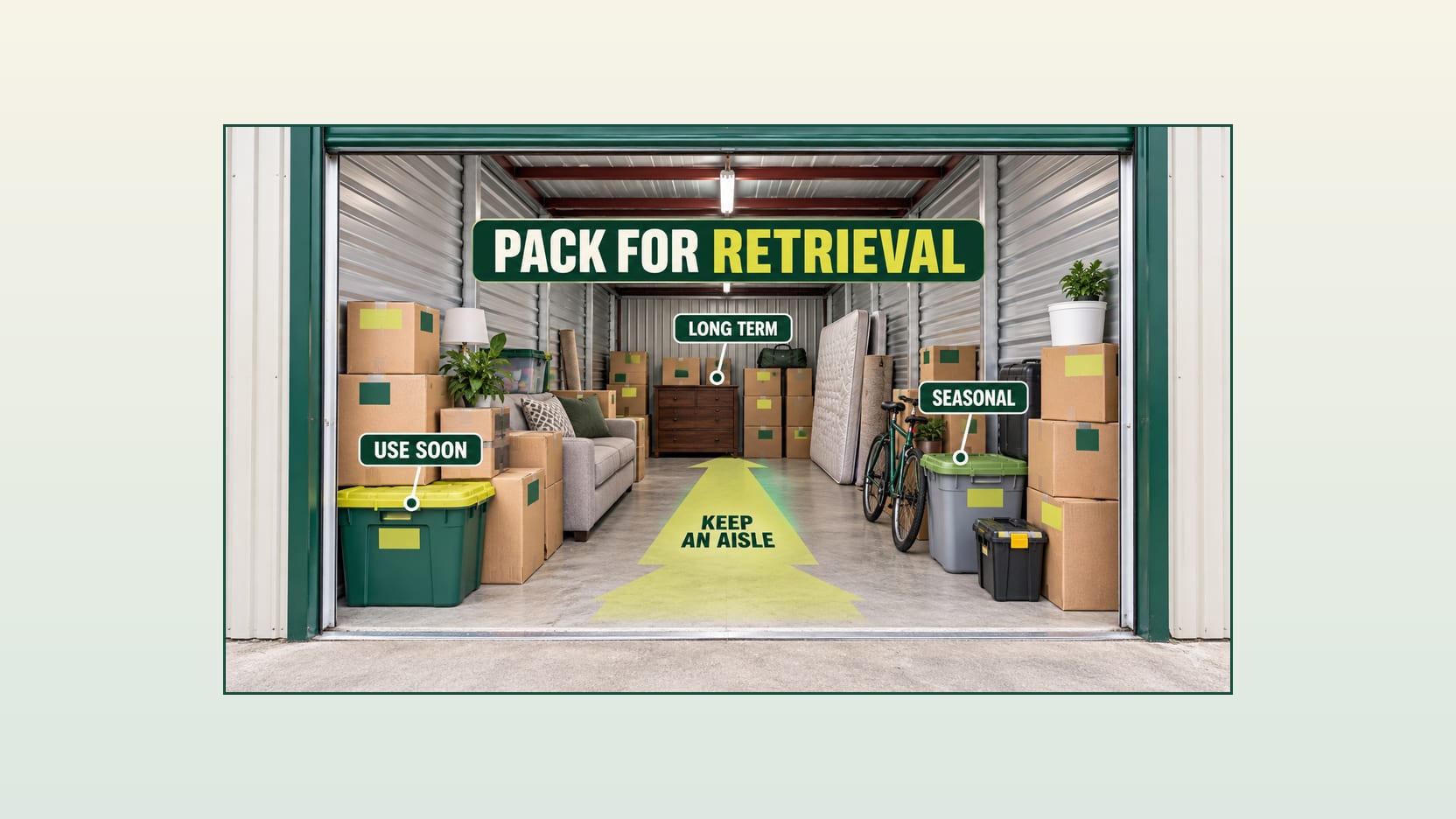
- Pack for retrieval, not just storage. The goal is being able to reach any single item without unpacking the whole unit.
- Leave a walking aisle down the center or along one side rather than building wall to wall.
- Put items you will need again soon near the front and door, and long term items toward the back.
- Use same sized, sturdy boxes where possible so stacks stay stable instead of leaning.
- Label boxes on more than one side, since a label facing the wall is the same as no label.
Plan the Layout Before You Load the First Box
Most people load a storage unit the same way they load a moving truck, working in from the door and filling space as they go without a plan for what goes where. That works fine for a truck making a one way trip. It works badly for a unit you might open a dozen times over the next year, because whatever gets loaded last is usually the only thing you can actually reach.
Think in Zones, Not One Big Pile
Before anything goes in, decide roughly where three categories will live: things you might need in the next month, things you are storing for the season, and things going in for the long haul with no plan to touch them soon. Seasonal decorations, off season clothing, and sports equipment belong near the front. A dresser you are storing during a renovation and do not need until it is done belongs in the back.
Build a Walking Path, Not a Solid Wall
It is tempting to stack boxes and furniture wall to wall to maximize the space, and it does technically fit more. It also means reaching anything in the back half of the unit requires moving everything in front of it first, which turns a five minute errand into an hour long one. Leaving a narrow aisle down the center, or along one side if the unit is narrow, costs some capacity but saves far more time than it costs, especially in a unit you plan to visit more than once.
Furniture as the Frame, Boxes as the Fill
Large furniture, a couch on end, a mattress on its side, a dresser, works well as the outer frame of the layout since it does not need frequent access and can safely sit against the walls. Boxes fill in around and on top of that frame, staged with the ones you will need soonest closest to the aisle and the door.
Boxes That Actually Stack
A stack of mismatched box sizes leans and eventually falls, which is both a safety issue and the reason a lot of units end up in disarray within a few months of being packed carefully. Same sized, uniform boxes stack flat and stay stacked, and heavier items belong on the bottom of any stack with lighter, more fragile items on top, never the other way around. Overfilled boxes bulge and lose their stackability fast, so a box that will not close flat is a box that is too full.
What Belongs in a Box and What Does Not
Plastic bins seal out dust and moisture better than cardboard, which matters more for anything staying in the unit longer than a season. Cardboard still works fine for shorter term storage and is easier to label clearly on multiple sides. Either way, avoid sealed plastic bags for fabric or anything that can trap moisture and grow mildew, since a bag that seems airtight and protective often does the opposite over months of storage.
Labeling That Works From Across the Unit
A label on the top of a box is useless once anything is stacked on top of it. A label on one side is useless once that side faces the wall. Labeling at least two sides of every box, ideally with a short description rather than just a category name, is the difference between finding a specific item in two minutes and opening six boxes to find it.
A Simple Inventory Beats Memory
For a unit holding more than a handful of boxes, a short written or photographed inventory of what is in each labeled box saves more time than any labeling system alone. It does not need to be elaborate, a phone photo of the inside of each box before sealing it, with the box number written on the outside, is usually enough to answer "which box has the holiday decorations" without opening anything.
Packing for a Vehicle Space Is a Different Job
Everything above applies to a household unit. A parking space for a boat, trailer, or RV is a different kind of organizing problem entirely, less about box layout and more about hitching room and access for maintenance. Our guide on choosing the right unit size covers sizing both kinds of space correctly, and if you are specifically working out a trailer or equipment parking layout, our trailer and equipment parking page covers that in more detail.
Getting Set Up at Backyard Storage in Marion
Backyard Storage sits on FM78 East in Marion, and a well planned layout matters even more with drive up access like ours, since being able to pull a truck right up to the door only helps if what you need is not buried behind everything else. If you are not sure how to lay out a specific unit size, stop by or call and we can walk through it with you before moving day.