


Preparing Your RV or Boat for Long Term Storage
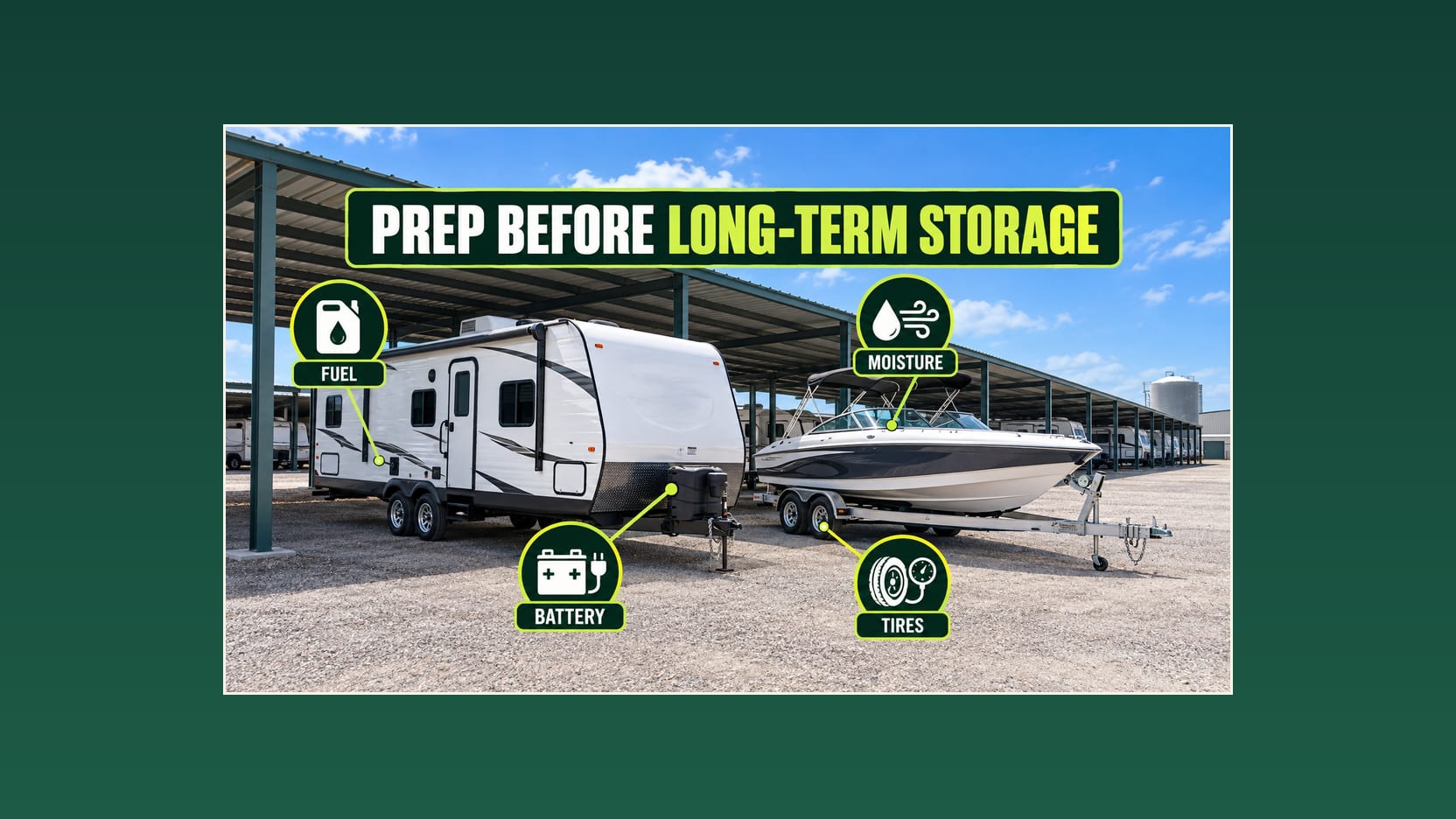
Most storage prep advice starts with washing the exterior. That is not wrong, but it is not what actually fails during a long stretch in storage. A boat or RV does not get damaged by dust. It gets damaged by fuel that sits and separates, a battery that drains itself dead, tires that flat spot from sitting in one position, and moisture that has nowhere to go. Those four things cause the vast majority of the repair bills people run into when they pull a rig out after months of sitting, and they are also the four things a quick pre storage wash down does nothing to prevent.
At a Glance
- Fuel left untreated in a tank for months separates and can cause starting and fuel system problems in the spring.
- A battery left connected in a stored vehicle typically drains dead within six to eight weeks from parasitic draw alone.
- Tires lose pressure gradually during storage, and an underinflated tire sitting in one position for months can develop a flat spot.
- Moisture trapped inside a closed RV or boat compartment causes far more damage over a season than sun exposure does.
- Backyard Storage offers both open air and covered parking with electricity, useful for running a battery maintainer through a long storage stretch.
Fuel: The Problem That Shows Up Months Later
Fuel sitting untouched for an extended period breaks down. Ethanol blended gasoline in particular absorbs moisture over time and can separate, leaving a layer that causes rough starts, clogged fuel lines, or a fuel system repair that costs far more than the ten minutes it takes to prevent.
The Two Step Fix
Fill the tank close to full before storage, not empty. A full tank leaves less room for condensation to form on the interior walls, which is one of the main sources of water contamination in a stored fuel system. Add a fuel stabilizer rated for the length of time the vehicle will sit, then run the engine for ten to fifteen minutes so the treated fuel actually circulates through the lines and injectors, not just the tank.
Battery: The Fastest Thing to Fail
A battery left connected to a vehicle's electrical system continues to lose charge the entire time it sits, even with everything switched off. Interior clocks, alarm systems, propane detectors, and other small draws add up, and a battery that seemed fine when the rig was parked is often dead within six to eight weeks purely from this parasitic drain, before anything else has gone wrong.
What Actually Prevents This
Disconnecting the battery stops the drain but does nothing to maintain the battery's charge over a long stretch, and a battery that sits fully disconnected for months can still lose enough charge on its own to need a jump. A battery maintainer, plugged in and left connected the entire time the vehicle sits, is the better fix, since it delivers a small steady trickle that offsets self discharge without overcharging the way a full size charger left connected indefinitely can. This only works with somewhere to plug it in, which is exactly what covered parking with electricity at Backyard Storage is built for.
Tires: The Damage That Happens While Standing Still
A tire sitting in one position for weeks or months, especially under the weight of a loaded RV or a boat trailer, develops a flat spot where the rubber has been compressed against the ground the whole time. Underinflated tires develop this faster than properly inflated ones, and the pressure loss that happens naturally during storage makes this a slow, easy to miss problem until the rig is pulled out and the ride feels rough.
Simple Prevention
Inflate every tire to the maximum sidewall rating before storage begins, not the everyday driving pressure, since tires lose pressure gradually over weeks even with no leak. For a rig sitting longer than several months, jack stands that take the weight off the tires entirely prevent flat spotting altogether, though this is more common for a rig stored at home than one parked at a facility.
Moisture: The Quiet Damage Inside
An RV or boat that sits closed up for a season traps humidity inside, and that trapped moisture is responsible for more mold, mildew, and interior damage over a storage season than direct sun exposure causes. This matters more in this part of Texas than it might somewhere drier, since Guadalupe County humidity does not let up just because a rig is parked.
For an RV
Leave roof vents cracked if the RV has vent covers that keep rain out, and consider a small moisture absorbing product inside cabinets and closets. Drain the fresh water tank and lines, and bypass the water heater if the RV will sit through a hard freeze, since standing water in the plumbing is the single most expensive winter storage failure and it is entirely preventable with fifteen minutes of draining.
For a Boat
Drain the bilge completely and remove the drain plug, storing it somewhere memorable rather than leaving it in the boat. Wipe down and dry lockers, live wells, and coolers before closing everything up, and remove seat cushions if possible so trapped moisture does not sit against the fabric the entire time the boat is stored.
Covering It Without Trapping Moisture In
A cover protects against sun and dust, but the wrong kind of cover causes exactly the moisture problem it was supposed to prevent. A non breathable plastic tarp traps humidity against the surface underneath it, which does more damage over a season than leaving the rig uncovered would have. A breathable, fitted cover designed for an RV or boat lets moisture escape while still blocking sun and debris, and it is worth the extra cost over a generic tarp for anything sitting longer than a few weeks.
Getting Set Up at Backyard Storage in Marion
Backyard Storage sits on FM78 East, close enough to Canyon Lake, Lake McQueeney, and Lake Dunlap that a lot of what we store is exactly this kind of RV or boat, parked for weeks or months between trips to the water. If you are setting up a battery maintainer or need power for anything else during storage, our covered parking with electricity is built for that. For help deciding what size space actually fits your rig before you commit, our guide on choosing the right unit size covers how to measure it correctly, and if you are storing a larger fifth wheel or motorhome, our page on large vehicle and fifth wheel parking covers sizing for rigs that size specifically.